The Search Behavior Shift Healthcare Can’t Ignore
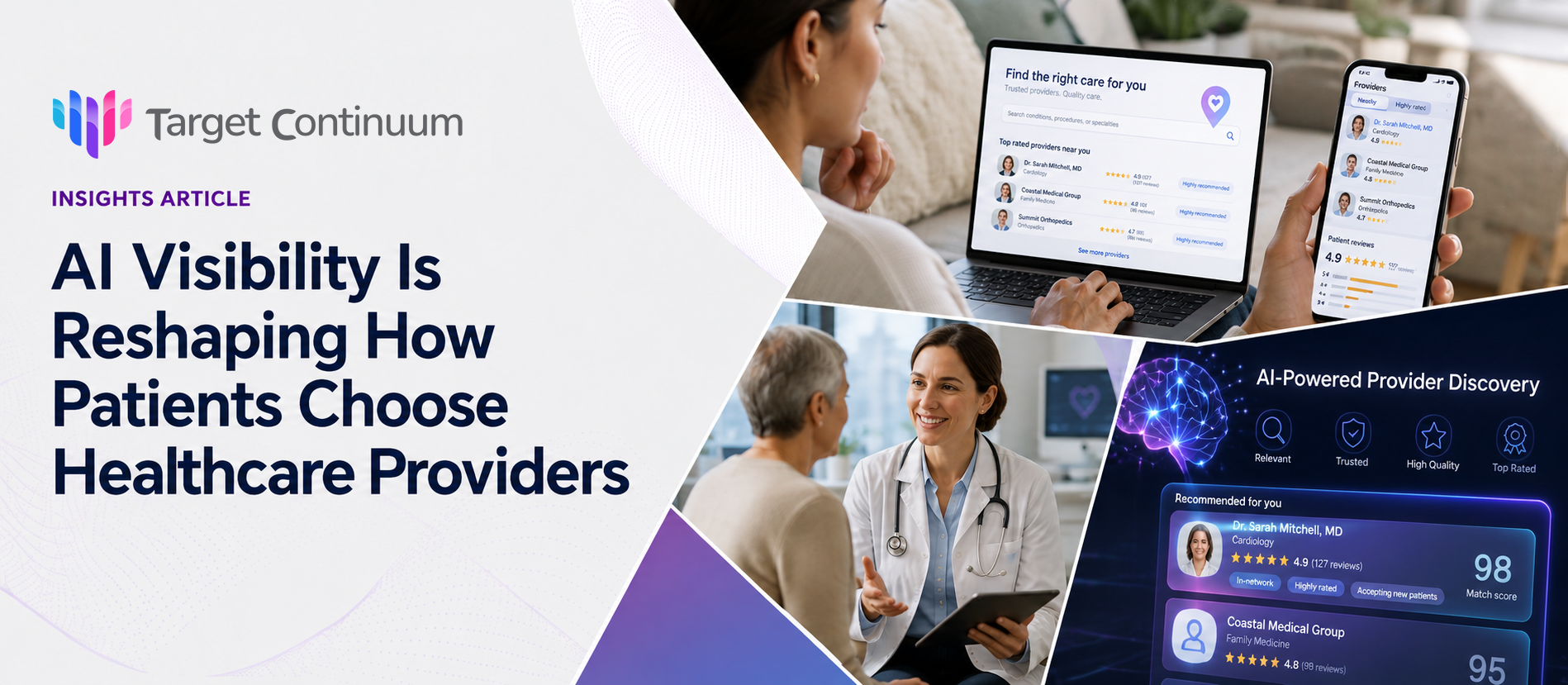
Patients are increasingly turning to AI tools like ChatGPT, Gemini, Claude, and Perplexity to evaluate, compare, and make decisions about healthcare providers. Instead of browsing ten websites and piecing information together themselves, patients are asking AI systems direct questions like, “Which orthopedic surgeon near me has the most experience with ACL repairs?” or “Which cancer center would you recommend and why?”
That shift has massive implications for healthcare organizations, especially because many of the signals these AI systems rely on are very different from traditional SEO.
Why Strong Healthcare Brands Still Struggle With AI Visibility
Dana Lampert, Founder and CEO of True Signal, has spent the last two years studying how AI models gather information, how they generate recommendations, and why some organizations consistently surface in AI-driven responses while others barely appear at all.
From what he sees, many healthcare organizations assume their reputation automatically translates into AI visibility. In reality, AI systems can only evaluate what they can actually see, verify, and understand. A hospital may have incredible outcomes, deeply experienced physicians, and strong community trust, but if that information lives mostly inside internal systems or scattered across fragmented digital properties, AI models may not have enough confidence to meaningfully recommend them.
That creates a disconnect healthcare leaders are only beginning to recognize. Historically, provider organizations could rely heavily on self-published messaging. Websites could claim expertise, leadership, or quality without much outside verification. But AI systems operate differently. They increasingly prioritize structured, verifiable, and corroborated information over broad marketing claims.
What a Trust Record Actually Does
Transparency is king in AI discoverability. That idea sits at the center of True Signal’s Trust Record technology, which is now being brought into healthcare through an exclusive partnership with Target Continuum.
At its core, a Trust Record is designed to help AI systems better understand a healthcare organization through structured, continually updated operational data. Instead of relying primarily on reviews or generic directory listings, AI models gain access to richer information about provider experience, procedure volumes, specialties, outcomes, organizational scale, and operational capabilities.
It’s essentially a living, AI-readable profile of an organization and a centralized source of truth that allows models like ChatGPT or Gemini to generate more accurate and trustworthy descriptions and recommendations.
Why AI Recommendations Matter More in Healthcare
What makes this especially important for healthcare is the nature of the decisions patients are making. Choosing a provider is fundamentally different from choosing a restaurant or hotel. These are high-trust, high-stakes decisions, and patients are increasingly using AI systems as a kind of decision-support partner throughout the process.
Rather than just asking for recommendations, many people are comparing providers head-to-head. They are asking follow-up questions about specialties, experience, success rates, and physician backgrounds. In some cases, they are using multiple AI models to cross-reference information before ever visiting a provider’s website.
That means AI discoverability is evolving from an SEO conversation to a patient acquisition conversation.
The Early Adopter Advantage
It also helps explain why early adopters may gain a meaningful advantage. If one provider organization has rich, structured, verifiable information accessible to AI systems while competitors only surface basic website copy and reviews, the models naturally have more confidence in recommending the more transparent organization. The organizations willing to structure and expose that information early are effectively helping AI systems understand not just who they are, but why they deserve trust.
At the same time, it’s important not to frame this as “gaming the algorithm.” In many ways, it is the opposite. Healthcare organizations with genuine expertise, strong outcomes, and differentiated capabilities should want AI systems to fully understand those strengths instead of relying on incomplete or shallow signals.
How This Fits Into Target Continuum’s Strategy
That philosophy aligns closely with the broader direction we have been building toward through our Unified Patient Acquisition approach. As healthcare marketing becomes more fragmented across search, referrals, AI recommendations, reputation, access, and conversion, organizations increasingly need strategies that unify all of those layers instead of treating them as isolated channels.
AI visibility is simply becoming one more critical layer in that ecosystem. Through our exclusive healthcare partnership with True Signal, we are helping provider organizations prepare for a future where AI-driven recommendations increasingly influence patient decisions.
Where Healthcare Leaders Should Start
For healthcare leaders trying to figure out where to begin, we recommend starting with a simple exercise: open the AI platforms yourself and start asking difficult questions about your organization. Ask ChatGPT how it would compare your providers against competitors. Ask Gemini what it knows about your specialties. Ask Perplexity what differentiates your organization. Then look carefully at the answers.
In many cases, organizations will quickly discover gaps, inaccuracies, or areas where AI systems simply do not have enough trustworthy information to work with.
Those gaps are becoming increasingly important because the way patients search for care is already changing. Quietly but quickly, AI is becoming part of the front door to healthcare. And for organizations willing to adapt early, there is still time to shape how they are discovered inside it.
Ready to Learn More?
Speak with an AI visibility expert on our team and learn how we can help today.