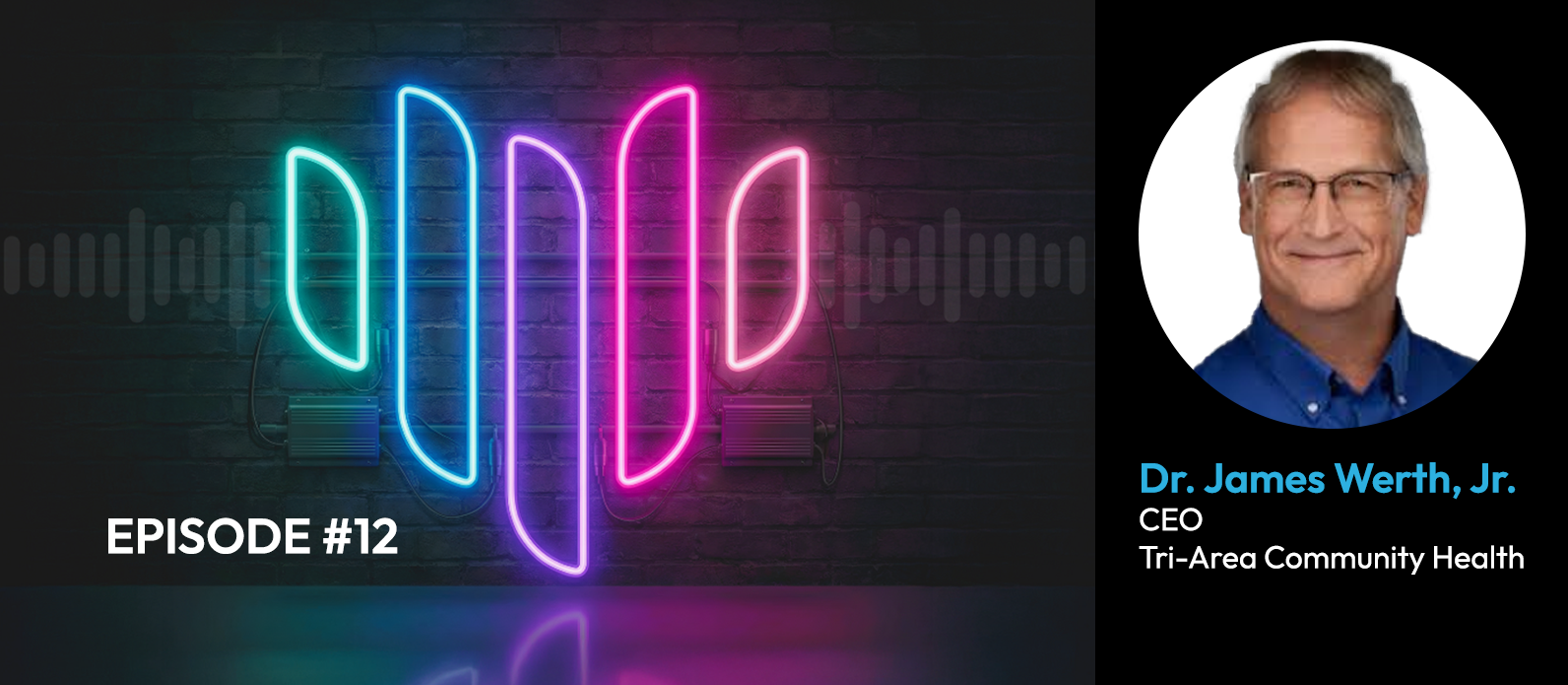
What does innovation really look like inside a rural Federally Qualified Health Center?
In this episode, Dr. James Werth, CEO of Tri-Area Community Health, discusses the realities of leading an FQHC where mission, margin, staffing, and community needs all collide at once. From telehealth and school-based care to drone delivery and behavioral health integration, James shares candid lessons from both successful initiatives and failed experiments, and why healthcare leaders need to become more comfortable talking openly about what didn’t work.
The conversation explores what makes FQHC leadership fundamentally different, why “build it and they will come” often fails in rural healthcare, and how operational groundwork, community buy-in, and staffing determine whether innovation succeeds.
Takeaways
FQHC leadership requires balancing mission and money simultaneously. Most FQHCs operate on razor-thin margins while still serving patients regardless of ability to pay.
- Rural healthcare innovation fails when organizations assume “build it and they will come.” Community adoption requires far more groundwork, trust, and workflow planning.
- Telehealth succeeds when it becomes operationally easy for both patients and staff. Technology alone is not enough without strong processes and support systems.
- Healthcare leaders should talk more openly about failure. Sharing what didn’t work helps other organizations avoid repeating costly mistakes.
- Successful community health programs depend heavily on local champions. Whether in schools, practices, or communities, trusted advocates drive adoption.
- Emerging technologies like drones could dramatically improve rural healthcare delivery, especially for telehealth equipment, prescriptions, and emergency response.
- Staffing remains the biggest operational challenge in healthcare innovation. New programs fail quickly when they create additional burdens for already stretched teams.
- Collaboration is one of the greatest strengths of the FQHC model. Because FQHCs don’t compete directly with one another, leaders can openly share strategies, ideas, and lessons learned.