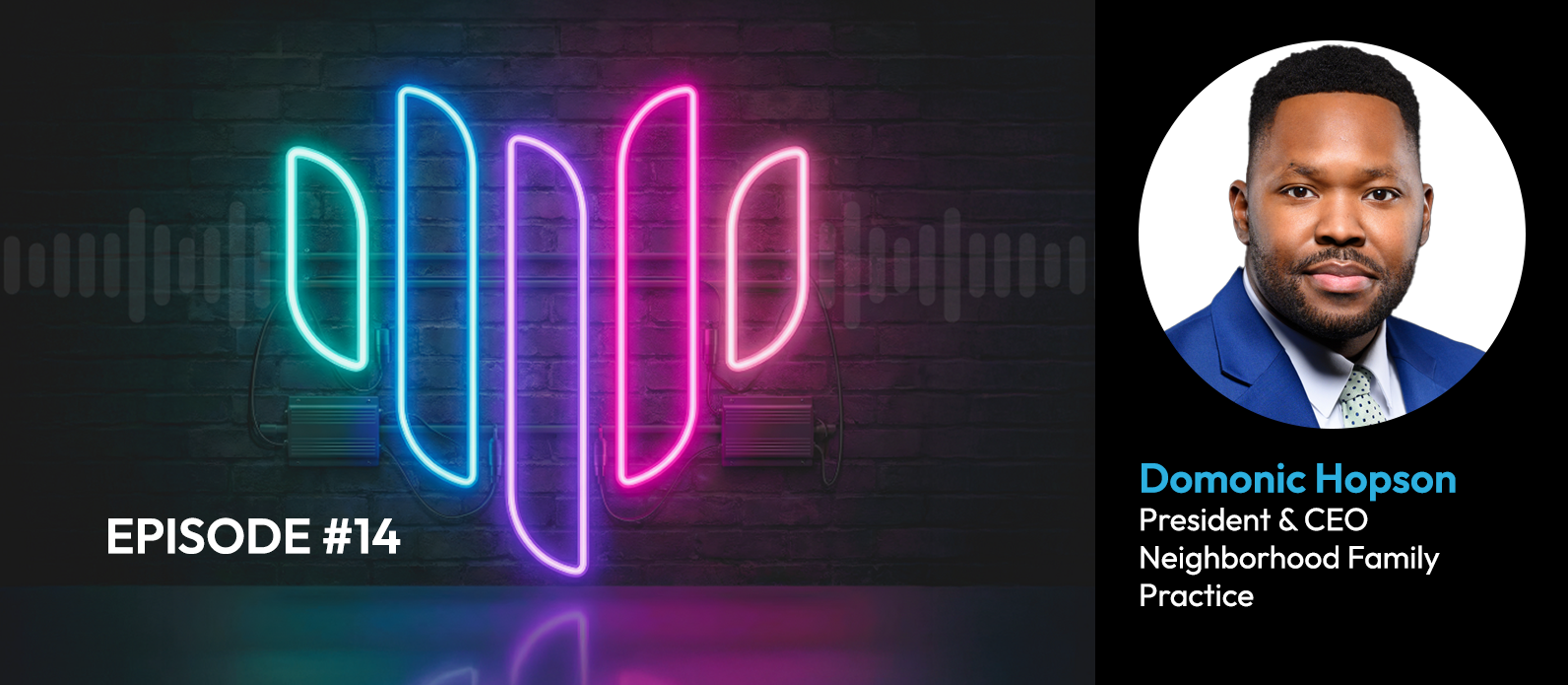
What does it take to create real access to healthcare in underserved communities? In this episode, Domonic Hopson, President & CEO of Neighborhood Family Practice, shares a powerful and deeply human perspective on the realities of community health leadership and the role Federally Qualified Health Centers play in rebuilding trust, improving outcomes, and creating access for patients too often left behind by the healthcare system.
Domonic discusses how his own upbringing shaped his passion for community health, why access to care is far more complicated than simply having insurance, and how poverty, housing insecurity, transportation, and mental health challenges all intersect with chronic disease management. The conversation also explores the growing importance of healthcare marketing and outreach in the FQHC world, why trust is built through consistency and community presence, and how organizations can balance mission-driven care with financial sustainability.
One of the most powerful moments of the conversation comes when Domonic describes America’s healthcare challenge this way: “We’re looking to build a world-class front door because our front door is broken right now.”
Takeaways
Access to healthcare is about far more than insurance coverage because transportation, affordability, scheduling, health literacy, and trust all shape whether patients actually receive care.
Chronic disease outcomes are heavily influenced by social drivers of health such as housing instability, food insecurity, and job insecurity.
FQHCs play a critical role as the healthcare system’s front door for underserved and underinsured communities.
Community health organizations must invest more heavily in communication and outreach to educate patients on how and when to access care.
Trust in healthcare is built through consistency, empathy, visibility, and long-term presence within the community.
Healthcare organizations cannot separate mission from financial sustainability because strong finances are what allow them to expand access and invest in care teams.
Marketing and patient education are becoming increasingly important for FQHCs as competition for patients grows in many markets.
The future of community health depends on building healthcare systems that are easier to navigate, more preventive, and more connected to the realities patients face every day.