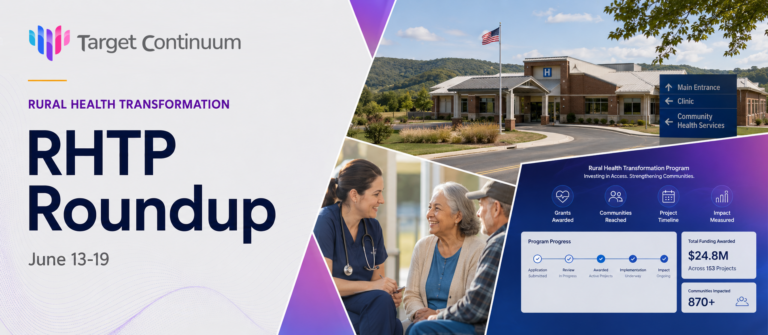
Carrie Foote, president of the Arizona Rural Health Association, joins Target Continuum’s Karmen Horton to explore how telehealth can expand access and improve outcomes in rural communities.
They discuss patient-centered program design, workforce development, sustainable funding strategies, and why technology alone cannot transform care.
Takeaways
- Telehealth can reduce rural health disparities, but programs must be designed around the real needs and circumstances of patients.
- Patient experiences and stories should inform both healthcare program design and rural health policy.
- Technology is only a tool; lasting transformation depends on people, workflows, change management, and organizational commitment.
- Rural organizations should align funding proposals with state priorities, internal capacity, measurable outcomes, and a clear sustainability plan.
- Pursuing funding before an organization is prepared can create more risk than opportunity, making “no” or “not yet” a valid strategic decision.
- Organizations that miss the first round of funding can learn from early recipients and position themselves more effectively for future opportunities.
- Upskilling existing employees can expand rural healthcare capabilities while improving workforce engagement and retention.
- Creative partnerships can bring specialty care, behavioral health services, school-based care, and emergency OB capabilities to communities that cannot support them independently.