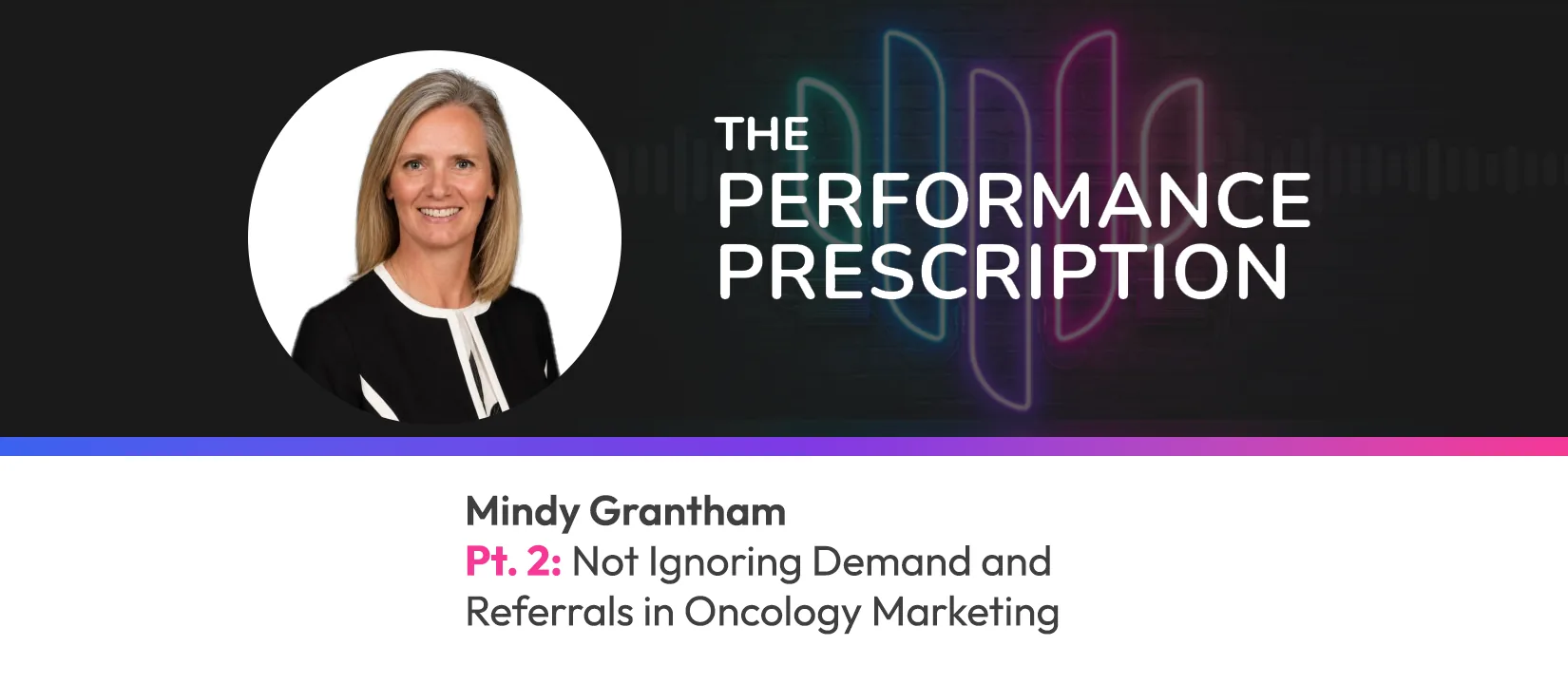
Mindy Grantham helped take Target Continuum’s already robust oncology marketing services to the next level. In this second segment from her reflective conversation with the TC team, she explores market demand and reality, and referral and physician confidence, two key factors to serving oncology patients. Her perspective is informed not only by her leadership roles at some of the most well-known institutions in the world, but ultimately by her own experience as a cancer patient.
Takeaways
- Oncology growth requires coordination across marketing, operations, and physician relations so that increased demand translates into patients receiving care.
- Tracking the full path from initial inquiry to completed appointment helps uncover missed follow-ups, scheduling delays, and no-shows that undermine marketing results.
- Every cancer type represents a distinct market, so growth strategies must account for local incidence, patient populations, competitors, clinical expertise, and available capacity.
- Screening outreach should encourage people to take action through helpful, sensitive messaging that avoids fear or implying knowledge of an individual’s cancer risk.
- Combining consumer marketing with strong referring-provider relationships builds patient trust while reducing dependence on referral sources that can change after mergers or acquisitions.
- Physician liaison outreach becomes more effective when teams prioritize relevant referral opportunities, understand referral behavior, and address barriers to sending patients.
- Building trust before diagnosis requires content across the patient journey, including signs and symptoms, screening, testing, treatment options, and patient stories.
- Marketing investments should focus on cancer types where the organization has a realistic opportunity to grow, guided by market demand, treatment patterns, organizational priorities, and capacity.